The UK still lacks a strategic vision – and the means to uphold one
2026 has been a turbulent year for the United Kingdom on the international stage. The once so-called ‘special relationship’ with the United States has been thrown into question following disputes over the use of UK bases for US strikes on Iran, claims to Greenland and a threat from the Trump administration to remove recognition of British sovereignty of overseas territories. Against such a background, the UK remains dependent on the US for a significant portion of its defence, from its trident nuclear deterrent to the F-35 aircraft that are at the forefront of its air force capability.
Meanwhile, the UK’s relationship with the European Union has shown to put it further at odds with the US. The ongoing dispute over Greenland’s sovereignty has shown the limits of operating between the two, as the decision to support Denmark against the White House has forced the UK into to the EU’s fold in the eyes of the administration in Washington. The UK is still dependent on the EU for the bulk of its trade, and debate has reignited on deepening its relationship with the Bloc. In further defiance of its American ally, the UK’s refusal to join the Trump administration’s campaign in Iran, and initial refusal to allow use of its bases has publicly irritated the White House, with personal derision directed towards Prime Minister Starmer. Where 2025 saw warm relations between Starmer and President Trump, filled with personal meetings and state visits, 2026 appears to have been limited to the British monarch’s successful state visit to Washington.
Given this turmoil, the UK seems to be simultaneously pursuing closer economic ties with Europe while positioning itself as a political mediator between the US and the EU. The US has relied on British bases for its strikes on Iran in 2026, and the UK has rescinded its agreement to hand sovereignty of its highly strategic Indian Ocean base in Diego Garcia to the Maldives, providing the US with vital operating bases for its naval and aviation assets in the conflict.
Through strategic, political and economic factors, Britain is tied between the influence of the American and European spheres. However, such a ‘third way’ between the two has not been met with the material and strategic demands of such a position. On a material level, the UK has shown itself to be incapable of supporting its own international interests or even contributing to collective operations. The UK’s dependence on Qatari LNG for its energy has left it vulnerable to the closure of the Straits of Hormuz, the implications of which are becoming increasingly felt through the pockets of British consumers. The absence of any British Naval presence during the crisis, as well as in the limitations of British air-defence in and around the Gulf demonstrates a lack of commitment to even attempting to provide security to the trade that the UK relies on. Similarly, the comments of several military figures, including former NATO Secretary General Lord Robertson, have emphasised the concerning state of the British military’s operational capability as the defence investment plan continues its months-long postponement.
In comparison, France, while economically wedded to the EU project, has shown itself to be capable of operating militarily by itself to achieve some of its defined foreign policy objectives. The French intervention in Mali in 2013 showed the success of its choices of defence investment, which prevented the collapse of the state through driving back rebels, requiring support only with initial airlift capability from its existing close economic partners. In the present, it is France that is sending an aircraft carrier to the Persian Gulf, even though the country is far less reliant on the region for its energy compared to the UK. France, like Britain, pursues its own independent foreign policy, separate from its economic relationship in the EU, but unlike its neighbour across the Channel, makes the material decisions that enable that independence.
But perhaps more fundamental is the lack of overall strategic vision in the UK. The last attempt at codifying this, former Foreign Secretary David Lammy’s ‘Progressive Realism’, was never clear in practice on what it meant to be either progressive or realist. The exchange of sovereignty of the Chagos Islands, with the associated base at Diego Garcia, does not seem like a principle one would associate with realist theory, although the government has now paused this process. Likewise, it is hardly realist to rely on international trade while failing to invest in the hard-power necessary to protect such interests. Similarly, the vision of a progressive foreign policy is questionable for some critics of the current government, be it in the lack of challenge to the policies of Israel in Gaza, lack of action on Sudan, and failure to question human-rights record of the Chinese government during trade discussions in 2025. The UK appears to wish to be both progressive and realist, without acknowledging what that fully entails, and where both ideas interchange.
With the May 2026 decision to ease some sanctions on third-party refined diesel and kerosene originating in Russia, the vision of a progressive realist foreign policy seems to be a thing of the past, if it ever existed at all. An effective strategic vision must be constantly worked towards, rather than merely a set of inspirational ideals. The recent events in the Persian Gulf only raises further questions of whether the UK has any sense of a strategic vision, let alone of realistic methods by which to achieve this.
However, there is no shortage of solutions to solve the crisis of strategy in British Foreign Policy. Firstly, there is the increasing consensus that underlying military capability will need to be buttressed with fresh investment, with defence spending likely requiring to quickly reach 3% of GDP. This would enable the necessary investment in personnel and equipment to enable the UK to more easily achieve its strategic goals and respond independently to international crises and the protection of its own interests. Likewise, UK policymakers must be realistic and entrepreneurial with its defence-industrial base, which has been limited by the recent history of under-investment into defence. The UK has excellent defence companies – but these require the funding and government encouragement to thrive, innovate and support the country’s capabilities so that it can reduce its reliance on increasingly unpredictable allies. In this capacity, the UK has under-utilised its relationship with Ukraine, so far having failed to encourage innovative Ukrainian companies to operate in the UK where their expertise could be valuable to redefining British defence for the contemporary age. With a strong established relationship between the two countries, this is a partnership that could bring the UK global innovative strength in the defence sector, as well in its own military composition.
But while the defence industry provides clear solutions to the lack of British military capability, there remains a more difficult question: what is British Strategy? The UK cannot rely on the historic form of military or diplomatic strategy. This is not merely a question of more top-end missiles, another aircraft carrier or a new fleet of main battle tanks. Ukraine, Gaza and now the Persian Gulf has shown that force composition needs to be innovated upon for a new age that emphasises a more networked battlefield incorporating unmanned assets and more numerous, cheaper munitions. The UK government must therefore make difficult choices to redefine its military and diplomacy for what it decides is its realistic vision, for which limited funds can be optimised. Military and diplomatic strategy are not independent, but complementary tools to work in the national interest. What that national interest is has of late been relatively ignored in designing the two tools of achieving it. The country must work to decide its identity on the global stage as we approach 2030.
As the UK continues to be challenged on how to secure its stability and prosperity in an increasingly chaotic world, it continues to be faced with difficult foreign policy decisions. The country continues to walk between the influence of Europe and the US, deepening economic ties with one, while continuing military dependence on the other. In desiring a foreign policy to be relatively independent of either party, it neglects to understand what the vision of this foreign policy is beyond vague ideals. To truly prosper in a less reliable world, the UK needs a grounded strategic vision, with the tools, and realistic investment, to achieve it.
Archie Mackesy - Operations Associate at St James’ Foreign Policy Group
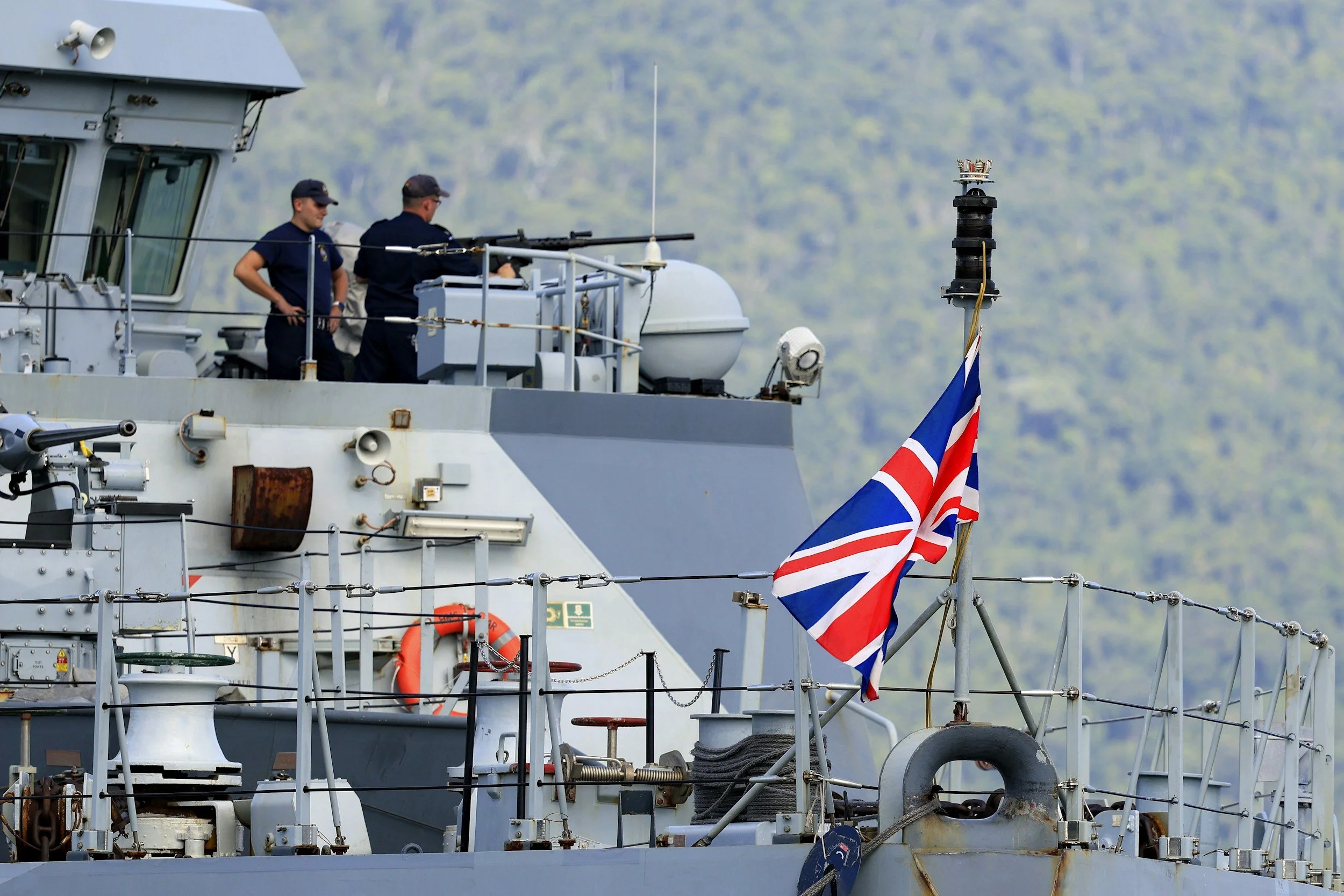
Photo Credit: David Clode on Unsplash