The Red Sea Pivot: Why the Horn of Africa is the New Global Strategic Centre
The global maritime map is being redrawn. For decades, the Strait of Hormuz has been an undisputed centre of geopolitical tension and questions of energy security. However, as the Middle East enters a period of prolonged volatility, the focus of international security has undergone a decisive shift. Security in the Red Sea and the wider Horn of Africa has emerged as one of the defining maritime issues of our time, moving from a peripheral concern to the very centre of the global strategic theatre.
As SJFPG founder Aliona Hlivco recently noted, this region currently sits at the volatile intersection of three converging crises: the systematic militarization of the Red Sea by Houthi rebels, the ongoing instability emanating from Iran, and an urgent global search for alternative energy and shipping corridors that bypass the increasingly weaponized Strait of Hormuz.
The Rise of the Alternative Architecture
The strategic gravity of the region is shifting. The Bab el-Mandeb Strait, which connects the Red Sea to the Gulf of Aden, is no longer viewed merely as a transit point. Instead, it is being integrated into a new, strategic alternative architecture. This architecture is designed to provide a hedge against the permanent weaponization of the Strait of Hormuz by Tehran, a condition that many analysts believe will persist until a radical, and currently improbable, change of leadership occurs in Iran.
This shift has thrust the Horn of Africa into the limelight. Regions that were once considered marginal to global power dynamics, specifically Somaliland and Puntland, are now critical to international stability. This is not merely theoretical; the diplomatic landscape is changing in real-time. We have recently witnessed Israel’s recognition of Somaliland’s independence, a robust and sophisticated diplomatic effort by Taiwan in the region, and a marked increase in engagement from the United States.
Berbera: A Strategic Asset Reborn
Central to this new reality is the city of Berbera. Once the colonial capital of the British Somaliland protectorate, Berbera is home to a major deep-sea port and an airfield featuring the longest Soviet-built runway in Africa. While neighbouring Djibouti is currently crowded with both U.S. and Chinese military presences—a coexistence defined by friction—Berbera offers a fresh and vital strategic alternative.
Access to the Port of Berbera has gained a new level of significance for Western allies. However, the path to securing this route is fraught with difficulty. The Houthis have effectively transformed the Red Sea into a contested battlespace, using asymmetric warfare to disrupt the global flow of goods. Compounding this is the persistent threat of Al-Shabaab and ISIS, both of whom remain active in the wider Horn of Africa.
A Convergence of Allied Interests
In response to these threats, we are seeing the predictable—and necessary—increase in the presence of Western-allied parties, including the United States, Israel, Taiwan, and the UAE. This coalition represents more than just military might; it represents a new model of regional cooperation.
Western partners are increasingly combining local expertise and intelligence assets from Somaliland and Puntland with advanced military surveillance and deterrent capabilities. This hybrid approach aims to establish a permanent security framework capable of protecting the 12% of global trade and the vast energy supplies that pass through these waters.
Furthermore, the involvement of Taiwan adds a unique dimension to the region's development. As Ambassador Allen Lou, the Taiwanese representative to Somaliland, has observed, the Red Sea is now intrinsically linked to the broader Indo-Pacific security framework. Because the majority of Taiwan’s energy supplies traverse this region, passivity is not an option. Taiwan’s approach offers a stark alternative to the People's Republic of China's (PRC) ‘debt-trap diplomacy’. While the PRC increases its influence in Africa through high-interest loans, Taiwan is offering an alternative rooted in grants and sustainable development.
The weaponization of maritime chokepoints has become a standard tool of 21st-century statecraft. As the Strait of Hormuz remains under the shadow of Iranian influence, the stability of the Horn of Africa becomes a non-negotiable requirement for global trade. Through the continued research of SJFPG, we will continue to monitor this pivot toward Berbera and the Red Sea – a region that is no longer the "backdoor" of global trade, but its new front line.
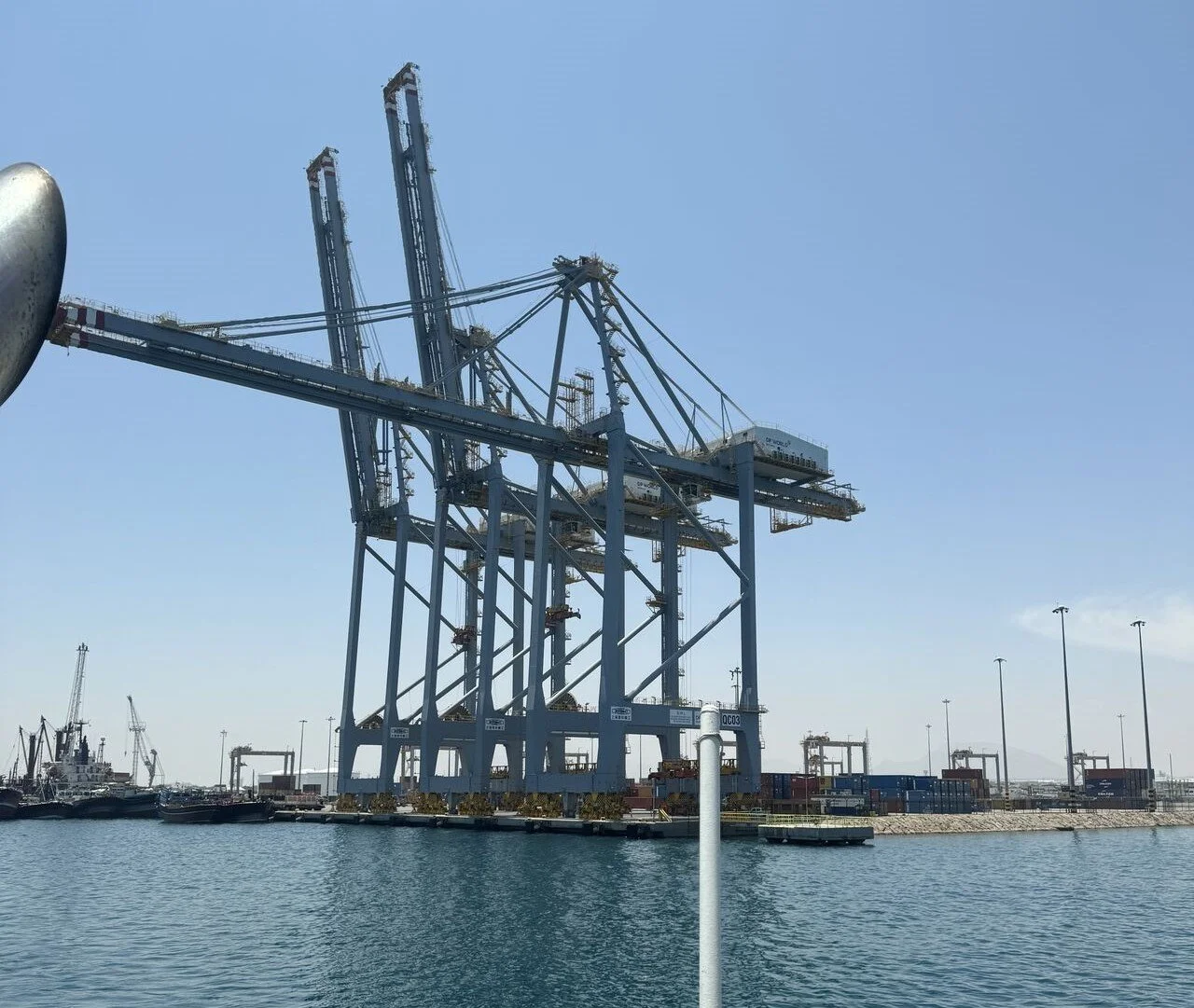
Recent Port infrastructure in Berbera, Somaliland