Insights on the Integrated Security and Economics from the Oxford M&A Symposium
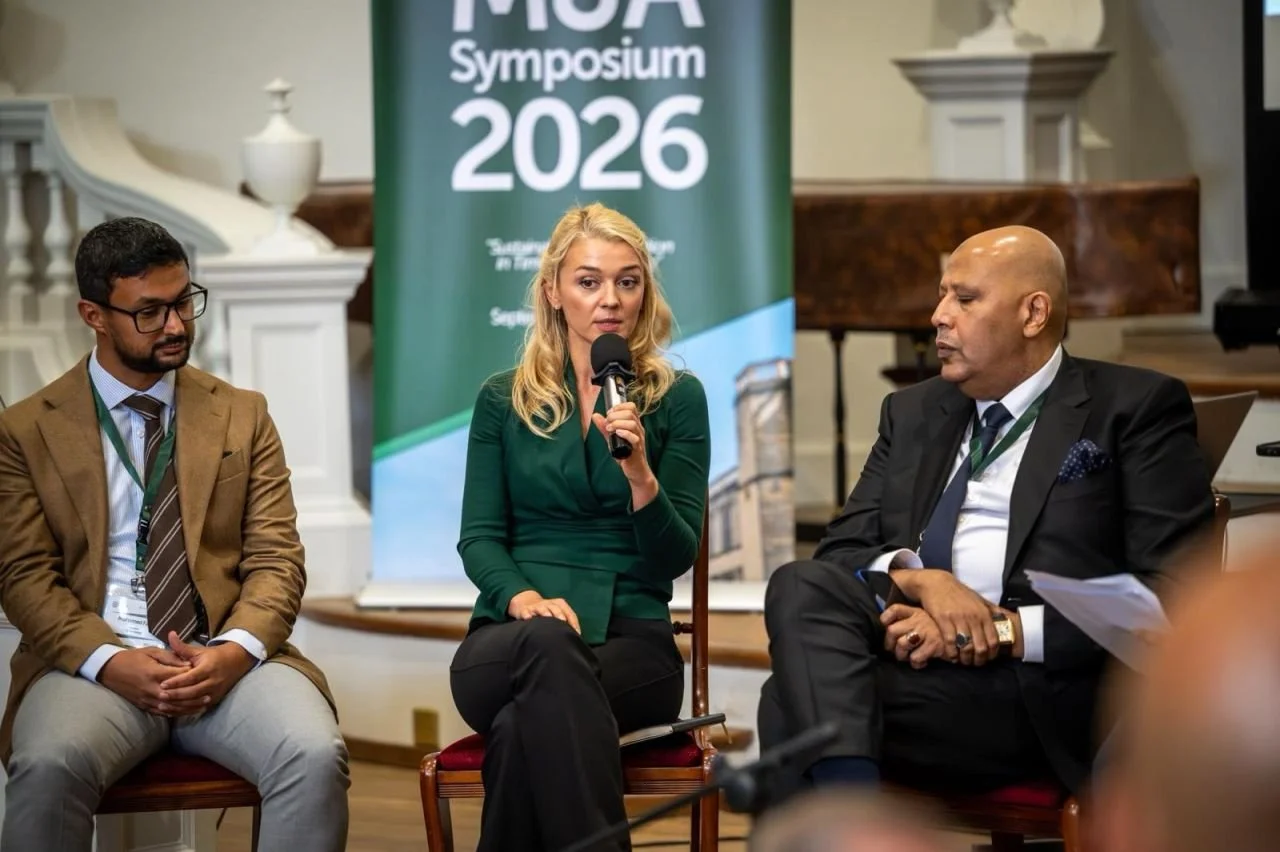
Speaking at the Oxford M&A Symposium at Wadham College, St James' Foreign Policy Group CEO Aliona Hlivco set out the critical trade and logistical challenges facing Ukraine during ongoing wartime operations. Addressing an audience of legal, financial, and policy experts, her presentation examined the pressure on Ukraine's maritime corridors and the strategic evolution of the EU–Ukraine Solidarity Lanes.
The Evolution of Strategic Logistics
Initially established as an emergency response to Black Sea blockades and intended primarily to maintain Ukrainian agricultural exports, the EU–Ukraine Solidarity Lanes have undergone a fundamental shift. Hlivco emphasised that these corridors have matured into a permanent, strategic trade infrastructure linking Ukraine directly with the EU single market.
While deep-sea Black Sea ports remain indispensable for high-volume bulk commodities, the terrestrial and riverine routes established under the Solidarity initiative provide crucial operational redundancy. They protect against maritime disruptions while supporting sustainable two-way trade flows between Ukraine and European partners.
Dual-Use Security and Economic Integration
Beyond commercial freight, these transport links now serve as vital dual-use corridors. They facilitate the continuous flow of humanitarian aid and military logistics into Ukraine while supporting essential domestic exports outward.
In the long term, this logistics network represents more than a temporary wartime workaround; it forms the physical infrastructure required for Ukraine’s broader economic alignment and ultimate integration into the European Union.
For her reflections in full, you can find Aliona’s recent post on her experience at the 2026 Oxford M&A Symposium here.